

By Kristina Panos
As we celebrate the big 2-5-0 of our nation this Fourth of July, there is plenty of history to reflect upon.
Much of that history comes alive every year, right here in town. Anywhere you go, from the park to the lake to the patio, you’re likely to see at least one type of invasive plant lurking about.
Although some of them may be nice to look at, invasive plants are called so because they crowd out native ones and steal resources. Their presence adversely affects pollinators such as bees and butterflies. Some invasives are more serious than others, but none belong in our ecosystem.
Involuntary Immigration
Often referred to as ‘aliens’, there are several species of bush, vine, tree, and plant that were brought here for one reason or another throughout history. But according to Hunter Moore, WildLands Program Manager at Bridging the Gap, there’s no reason to villanize them.
“I think that it can be really easy to characterize invasive plants as evil, or as though they’re trying to kill nature on purpose. But it’s not the plant’s fault that it’s here.”
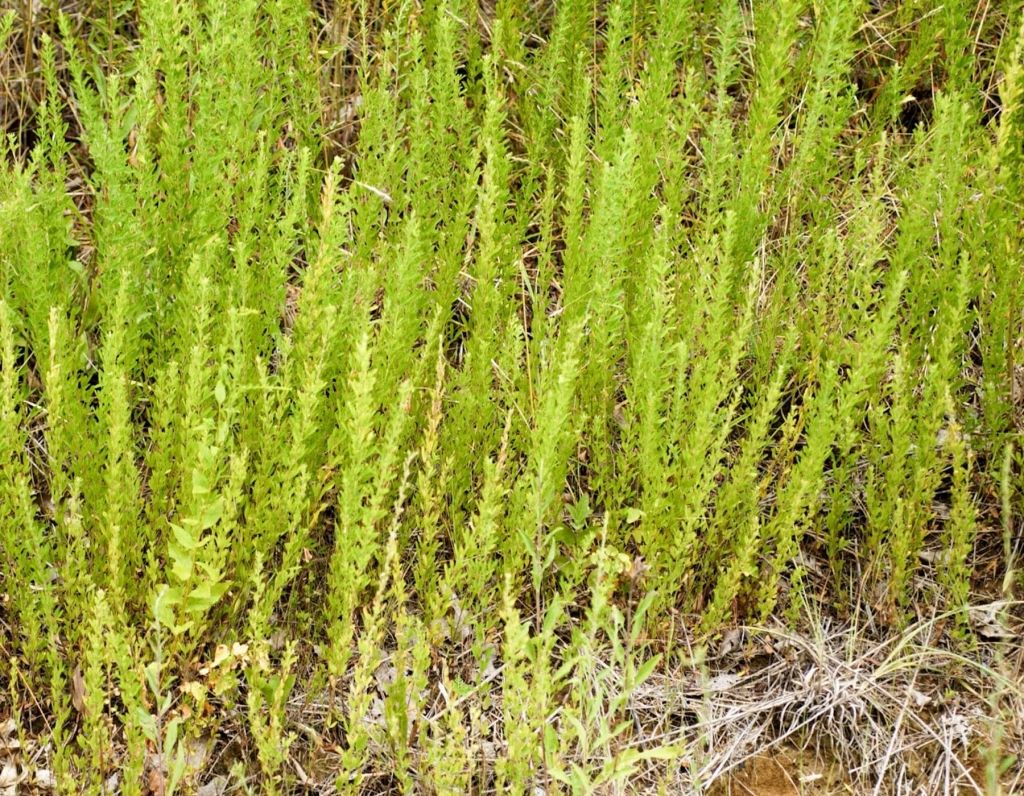
For example, if you’ve ever stared out across the prairie on a road trip across Kansas or Missouri, you’ve probably seen something called Chinese bush clover, or sericea. Here in town, it tends to get mowed into submission.
“This was brought over in the 1800s because it spreads and makes colonies,” says Hunter. “People thought it would be good grazing supplemental material, but animals in general, especially livestock, don’t eat it (much) because of the bitter tannins present on the leaves and stems.”
Identifying Invasives
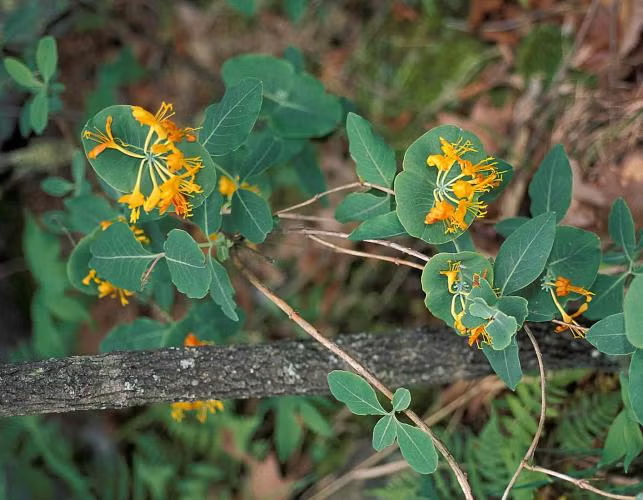
You’re likely aware of one the most common invasive plants: honeysuckle. There are two main species to watch out for; the bush honeysuckle, and the vining Japanese version. To complicate things a bit, there are also two native species, which can be identified by their yellow or reddish-orange flowers.
Other invasives include a vine called winter creeper, which can take over forests and bring down trees. And you’ve no doubt seen and smelled a flowering Callery pear tree in the spring, or cleaned up debris from one after a mild storm. Commonly known as Bradford pears, these are native to East Asia.
Although each cultivar started out sterile, these weak, ornamental trees escaped cultivation and have spread far and wide. The problem is that bush honeysuckle and Callery pears don’t help the ecosystem at all.

“Birds may eat them,” Hunter said, “but it’s basically like junk food.”
For the most part, the other invasives are decidedly no-no plants for one reason or another. For instance, poison hemlock is everywhere, and it’s not good for humans or animals to ingest or generally be around, because every part is so toxic.
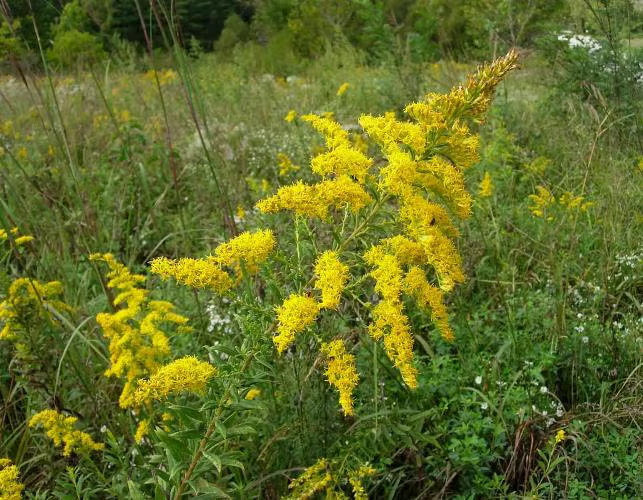
Conversely, that plant you keep pulling every year may be native. Goldenrod, which spends a few months growing several weedy-looking feet before finally flowering, is a prime example. Historically, goldenrod was used by the Native Americans as a bee sting poultice, and has other medicinal properties as well.
Fight the Good Fight
Hunter advised that pear and honeysuckle alike can be defeated by hacking the trunks down to a height of four to six inches, and then applying a heavily-diluted herbicide as soon as possible. They can also be dug out, though this is labor-intensive. If your property is overrun with invasive plants, it may be time to call in the professionals, of which there are a growing number.
Generally, transitional seasons are best for removal. When fall arrives, plants are going dormant and are no longer on high alert. In spring, the plant’s resources haven’t been built back up yet. One exception is sericea, which should be removed in the summer.
Believe it or not, the invasive army has reserve troops for sale down at the big-box hardware stores. But thanks to the Missouri Invasive Plant Council, they won’t be on standby much longer. The Council was able to get their Cease the Sale Initiative, designed to halt the sale of six invasive plants, passed in the Senate last July. By January 1, 2029, all will be phased out.

My Yard Is Bare; Now What?
There are plenty of visually similar, native alternatives to bush honeysuckle, Callery pear, and more. In addition to the native honeysuckles, serviceberry is a popular choice to replace both. This mid-sized, shrubby tree has pretty white flowers and summer berries that are nutritious to birds, and also make a fine jam.
“It’s important to meet people where they are,” Hunter said. “A lot of people just want pretty flowers and don’t take it further than that.” And honestly, that’s part of the reason why we have invasives in the first place.
You can find many more resources and alternatives at moinvasives.org.
Author

Discover more from Martin City Telegraph
Subscribe to get the latest posts sent to your email.